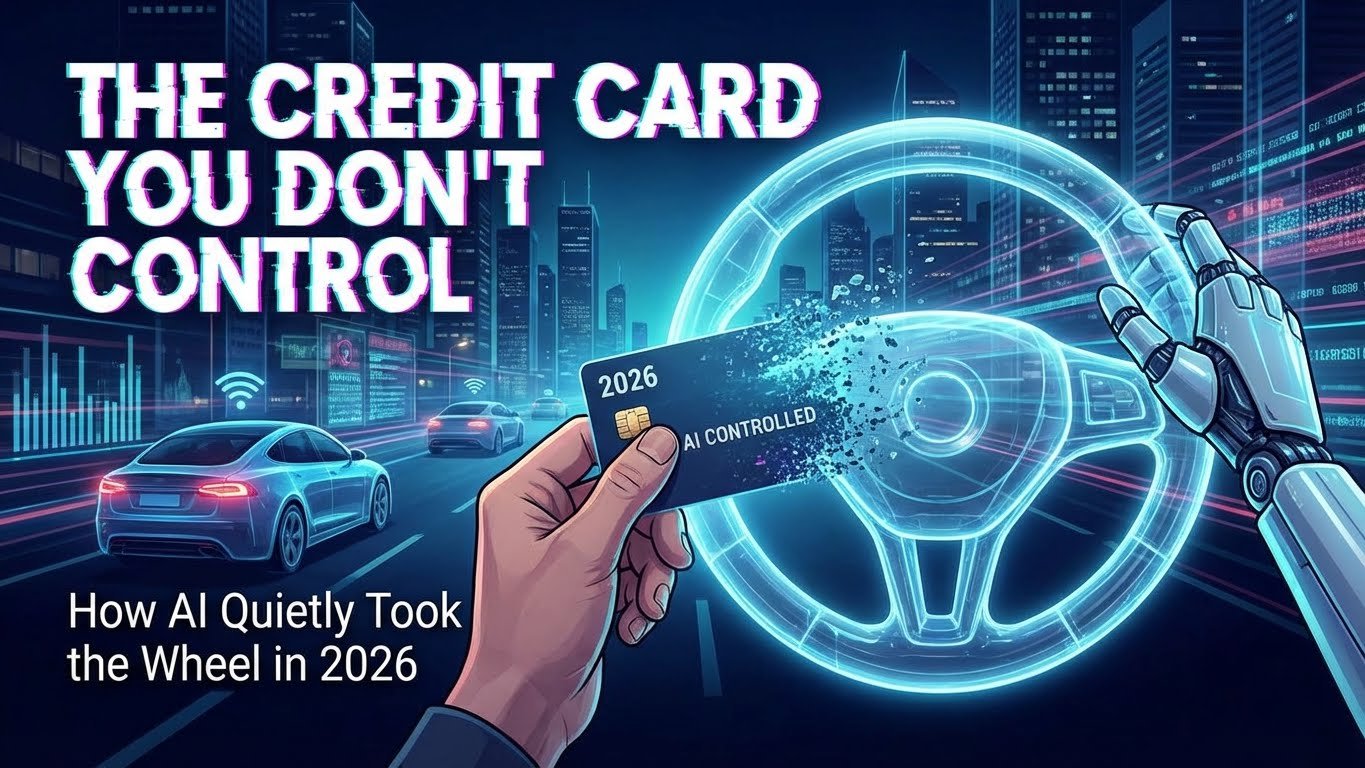
The Credit Card You Don’t Control Anymore: How AI Quietly Took the Wheel in 2026

In 2026, most people still say,
“I paid with my credit card.”

But that statement is no longer fully true.

You didn’t choose the card.
You didn’t decide how much credit to use.
You didn’t select the repayment method.

Your AI wallet did.

Credit cards still exist—but control has shifted. This article explains how AI quietly took the wheel of credit cards, why most users didn’t notice, what this means for personal finance, and how to stay empowered in a world where credit decisions happen faster than thought.


Credit Cards Used to Be Simple

Credit cards once had clear rules:

  • Fixed limit
  • Fixed billing cycle
  • Fixed interest rate
  • One clear statement

You spent.
You waited.
You paid.

That simplicity made responsibility obvious.


What Changed by 2026?

Credit cards didn’t disappear.

They evolved into credit engines inside AI wallets.

Today, a “credit card” is:

  • A funding source
  • A risk layer
  • A reward engine
  • A dynamic credit line

The plastic is irrelevant.
The intelligence is everything.


The Moment Control Quietly Shifted

The shift didn’t feel dramatic.

It happened gradually:

  • Auto-pay became default
  • Wallets started choosing cards
  • Limits became flexible
  • Payments stopped failing

Convenience replaced decision-making.

And most people welcomed it.


How AI Decides When You Use Credit

When you tap to pay, AI evaluates:

  • Cash balance
  • Upcoming bills
  • Credit utilization
  • Interest exposure
  • Reward optimization
  • Risk profile

Then it decides:
“Use credit now.”
Or:
“Use debit instead.”
Or:
“Split this payment.”

All before you blink.


Why You Rarely Notice the Decision

Because nothing feels different.

The payment works.
The receipt appears.
Life continues.

That invisibility is intentional.

Good systems feel effortless—even when they’re complex.


Smart Credit Is Not Traditional Debt

Old credit felt heavy.

New credit feels soft.

Because:

  • Repayments are flexible
  • Minimums adjust
  • Balances roll smoothly
  • AI prevents extreme risk

Debt still exists—but emotional warning signs are muted.


Why Credit Card Limits Feel Higher Than Ever

Limits didn’t magically increase.

They became dynamic.

AI raises or lowers usable credit based on:

  • Spending behavior
  • Repayment patterns
  • Income stability
  • Economic conditions

Your “limit” now changes silently.


The Disappearance of the Decline

Declines used to teach discipline.

In 2026, declines are rare.

Instead, AI:

  • Routes payments differently
  • Extends short-term credit
  • Adjusts settlement timing

The system protects convenience—but removes a learning signal.


Rewards Are No Longer a Choice

You don’t “pick” rewards anymore.

AI automatically:

  • Applies the best cashback
  • Converts points instantly
  • Selects optimal card networks

Rewards became passive.

That’s good—but also distracting.


When Optimization Replaces Awareness

Optimization focuses on numbers.

Awareness focuses on behavior.

AI optimizes:

  • Cost
  • Speed
  • Risk

But it doesn’t ask:
“Is this spending necessary?”

That question still belongs to you.


Why People Trust AI with Credit Decisions

People trust AI because:

  • It reduces mistakes
  • It avoids late fees
  • It feels smarter than humans

And in many ways—it is.

But intelligence doesn’t equal values.


The New Risk: Passive Financial Behavior

The biggest risk in 2026 isn’t fraud.

It’s passivity.

When systems decide everything:

  • Users disengage
  • Habits go unchecked
  • Small problems grow silently

Credit works best when it’s guided—not ignored.


Who Benefits the Most from AI-Controlled Credit?

  • Disciplined spenders
  • Busy professionals
  • Families managing multiple expenses
  • Users with stable income

AI amplifies good financial habits.


Who Needs to Be Careful?

  • Impulse spenders
  • Users with emotional shopping habits
  • Anyone carrying revolving balances

AI amplifies bad habits faster.


How to Take Back Control Without Fighting AI

You don’t need to micro-manage.

You need to set rules.

Do this:

  • Enable spending alerts
  • Set category caps
  • Review weekly summaries
  • Understand credit usage trends

You steer.
AI drives.


Transparency Is the Missing Piece

The future of credit isn’t less AI.

It’s explainable AI.

Users want to know:

  • Why credit was used
  • Why limits changed
  • Why a payment was split

Trust grows when systems explain themselves.


Why Going Back to Manual Credit Won’t Work

Some users try to disable automation.

That usually leads to:

  • Missed payments
  • Lower rewards
  • More stress

The solution isn’t control—it’s understanding.


Credit Cards Are Becoming Financial Assistants

Your credit card no longer just lends money.

It:

  • Predicts cash flow
  • Manages risk
  • Protects from fraud
  • Optimizes outcomes

That power must be paired with awareness.


The Real Question of 2026

It’s not:
“Is AI controlling my credit?”

It’s:
“Do I understand how it’s doing it?”

Those who understand win.
Those who ignore drift.


Final Thoughts: Control Has Changed—Not Disappeared

You didn’t lose control of your credit card.

Control simply moved:

  • From transactions
  • To rules
  • To oversight

In 2026, financial strength isn’t about choosing every swipe.

It’s about designing the system that chooses for you.


Frequently Asked Questions (FAQs)

1. Do I still control my credit card in 2026?

Yes, but control is indirect through rules and settings.

2. Is AI deciding my payments?

Yes, most modern wallets use AI to optimize payment decisions.

3. Is this safer than traditional credit cards?

Generally yes, due to better fraud detection and risk control.

4. Can AI increase my debt?

Only if spending habits are poor and alerts are ignored.

5. Should I disable AI features?

No. Learn and monitor them instead.

6. Are rewards better now?

Yes, but only valuable if spending is controlled.

7. Is this the future of credit cards?

Yes. Smart, dynamic, and AI-driven credit is the new standard.


Disclaimer

This article is for informational purposes only and does not constitute financial advice. Always review official terms and consult financial professionals when needed.
The Illusion of Easy Money: How AI Finance Is Changing Spending Habits in 2026

Money feels lighter in 2026.

Not because people earn more.
Not because prices are lower.

But because spending no longer feels heavy.

You tap your phone.
The payment succeeds.
Life moves on.

This ease has created a powerful illusion—the illusion of easy money. In this article, we’ll explore how AI-driven wallets, smart credit systems, and automated finance have reshaped spending habits, why money feels less real than before, and how to stay financially grounded in a world where payments happen faster than thought.


When Spending Stopped Feeling Serious

There was a time when spending required effort.

  • You counted cash
  • You signed receipts
  • You checked balances

That effort created awareness.

In 2026, spending is effortless.

Effortless doesn’t mean free—but the brain often treats it that way.


What Is the “Illusion of Easy Money”?

The illusion of easy money happens when:

  • Payments are instant
  • Credit is flexible
  • Limits rarely block purchases
  • Rewards mask real cost

Money feels abundant—even when it’s not.

This illusion doesn’t come from greed.
It comes from frictionless systems.


How AI Wallets Changed Human Behavior

AI wallets were designed to help.

They:

  • Prevent missed payments
  • Optimize rewards
  • Reduce fraud
  • Save time

But they also removed friction—the very thing that once slowed spending decisions.

When friction disappears, habits change.


Why Your Brain Loves AI Payments

Your brain prefers:

  • Speed
  • Convenience
  • Minimal effort

AI-powered payments satisfy all three.

What the brain doesn’t naturally track well is:

  • Long-term cost
  • Accumulated debt
  • Subtle overspending

That’s why spending feels easier—even when it’s not smarter.


Credit That Feels Like Cash

Smart credit systems have blurred a dangerous line.

Because:

  • Payments are split automatically
  • Limits adjust dynamically
  • Repayment feels distant

Credit feels like available money, not borrowed money.

This psychological shift is one of the biggest financial changes of the decade.


Why Declines Are Rare in 2026

Older systems said “no” often.

AI systems try hard to say “yes”.

They:

  • Shift payment sources
  • Extend micro-credit
  • Delay settlement

This protects convenience—but removes warning signals.

Declines used to teach limits.
Now limits whisper instead of shout.


Rewards Hide the Real Price

Cashback, points, and instant discounts feel good.

But they can distract from:

  • Total spending
  • Interest costs
  • Budget drift

Earning rewards does not mean saving money—unless spending is controlled.

AI optimizes rewards.
Humans must optimize behavior.


Micro-Spending: The Quiet Habit Builder

In 2026, most people don’t overspend once.

They overspend a little, many times.

  • Extra delivery fees
  • Convenience subscriptions
  • Small upgrades
  • One-click add-ons

Each payment feels harmless.
Together, they reshape cash flow.


Automation Removes Guilt—but Not Consequences

Older spending had emotional feedback.

  • Guilt
  • Regret
  • Hesitation

Automation removes those emotions.

But consequences remain:

  • Higher balances
  • Tighter cash flow
  • Long-term interest

Emotion disappeared.
Math did not.


Why People Check Their Wallet Less Often

People check less because:

  • Payments rarely fail
  • Balances adjust smoothly
  • Apps reassure users

This creates delayed awareness.

Problems are noticed later—when they’re larger.


AI Is Not the Villain

This is important.

AI didn’t create bad habits.
It amplified existing ones.

Good habits scale well.
Bad habits scale faster.

Technology reveals behavior—it doesn’t replace responsibility.


The New Financial Divide

The real divide in 2026 is not income.

It’s awareness.

  • Aware users use AI to save
  • Unaware users let AI spend

Same tools.
Very different outcomes.


How Smart Users Beat the Easy Money Trap

Smart users don’t fight automation.

They guide it.

They:

  • Set category limits
  • Enable behavioral alerts
  • Review summaries weekly
  • Treat credit as delayed cash

They stay mentally present—even when systems are automatic.


Why “I’ll Check Later” Is Dangerous

Later rarely comes.

By the time spending is reviewed:

  • Patterns are set
  • Subscriptions renewed
  • Balances grown

Regular small reviews beat rare deep ones.


The Role of Financial Friction (Yes, You Need Some)

Total friction is bad.

Zero friction is worse.

Healthy systems include:

  • Gentle alerts
  • Spending summaries
  • Pattern warnings

These moments slow you down—just enough.


The Future: AI That Questions You

The next step isn’t more automation.

It’s reflective automation.

Wallets will ask:

  • “Is this aligned with your goals?”
  • “This is higher than usual—continue?”
  • “You’ve spent more this week. Want a pause?”

Not control.
Conversation.


How to Stay Grounded in 2026

You don’t need spreadsheets.
You need rhythm.

A simple approach:

  • 5 minutes weekly review
  • Monthly subscription scan
  • Quarterly credit health check

That’s enough to break the illusion.


Final Thoughts: Easy Money Is Not Free Money

Money didn’t get easier.

Spending did.

The illusion of easy money is powerful—but temporary.

In 2026, financial strength comes from:

  • Awareness
  • Intention
  • Partnership with AI

Let technology handle speed.

You handle meaning.


Frequently Asked Questions (FAQs)

1. What is the illusion of easy money?

It’s when frictionless payments make spending feel harmless and unlimited.

2. Are AI wallets bad for spending habits?

No, but they require awareness.

3. Why doesn’t spending feel painful anymore?

Because effort, delays, and physical actions are gone.

4. Does smart credit increase debt?

It can, if spending is not monitored.

5. How can I avoid overspending in 2026?

Use alerts, reviews, and spending insights.

6. Should I stop using credit cards?

No. Use them intentionally.

7. Is this the future of personal finance?

Yes. Awareness—not resistance—is the solution.


Disclaimer

This content is for educational purposes only and does not constitute financial advice. Always consider your personal financial situation before making decisions.

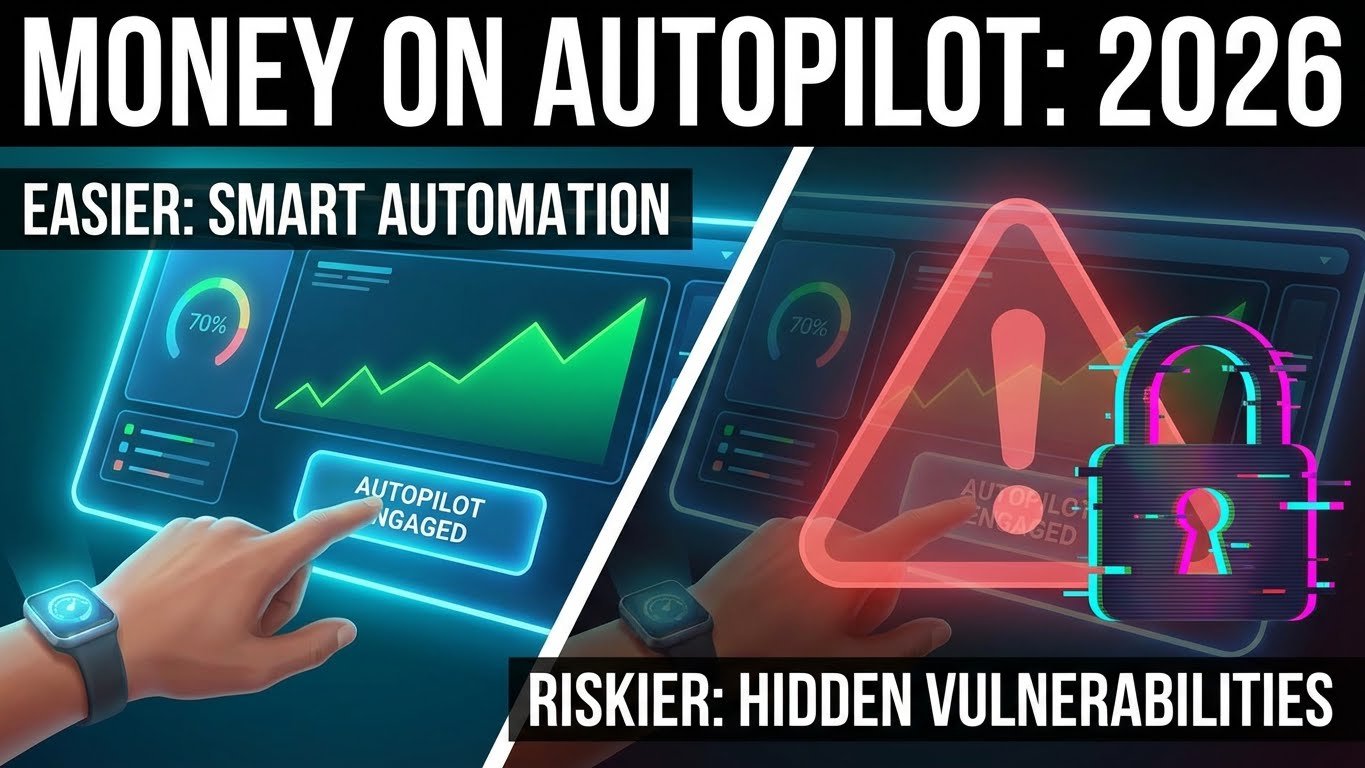
Money on Autopilot: Why Managing Finances Feels Easier—and Riskier—in 2026

Money has never been easier to manage.

That sounds like a good thing.

Bills pay themselves.
Cards approve instantly.
Wallets pick the best option automatically.

Yet many people in 2026 feel something unexpected:

They feel less connected to their money than ever before.

This is the paradox of modern finance. As systems get smarter, financial life feels simpler—but also more distant. In this article, we’ll explore why money is now on autopilot, how AI wallets and smart credit changed personal finance, and how to stay financially strong without fighting technology.


The Shift from Management to Automation

In the past, managing money required effort.

You had to:

  • Track expenses
  • Remember due dates
  • Compare cards
  • Plan repayments

That effort created awareness.

In 2026, effort is optional.

Money systems now assume you want:

  • Convenience
  • Speed
  • Optimization

So they automate everything.


What Does “Money on Autopilot” Mean?

Money on autopilot means:

  • Payments happen without approval
  • Credit adjusts dynamically
  • Rewards apply automatically
  • Subscriptions renew silently
  • Wallets decide how to pay

Your role shifts from manager to observer.


Why Automation Took Over So Fast

Automation didn’t win because it was flashy.

It won because:

  • People hate friction
  • Mistakes are costly
  • Time is limited

AI reduced:

  • Missed payments
  • Late fees
  • Fraud risk
  • Decision fatigue

The trade-off? Less emotional awareness.


The AI Brain Inside Your Wallet

Every modern wallet runs a decision engine.

That engine evaluates:

  • Cash flow
  • Credit health
  • Risk score
  • Merchant type
  • Reward efficiency

It chooses the path that makes the most mathematical sense.

What it doesn’t measure well is how you feel about spending.


When Convenience Becomes Invisible Risk

Convenience removes warning signs.

In older systems:

  • Declines felt embarrassing
  • Low balance caused stress
  • Payment delays created pause

Now, AI smooths everything.

You rarely feel limits—even when they exist.


Why Debt Feels Softer Than Before

Smart credit has changed debt psychology.

Because:

  • Payments are flexible
  • Minimums adjust
  • Limits change dynamically

Debt feels less threatening.

But debt hasn’t changed.

Interest still compounds.
Balances still grow.
Habits still matter.


Autopilot Spending vs Intentional Spending

Autopilot spending happens when:

  • You don’t review
  • You don’t question
  • You don’t set rules

Intentional spending happens when:

  • AI handles execution
  • You handle direction

The future isn’t manual finance.

It’s guided automation.


Why Financial Anxiety Didn’t Disappear

Despite smarter tools, anxiety remains.

Why?

Because:

  • People don’t trust what they don’t see
  • Automation hides consequences
  • Money feels abstract

Clarity reduces anxiety more than control.


The Role of Financial Dashboards in 2026

Dashboards are the new budget.

Good dashboards show:

  • Spending trends
  • Category drift
  • Subscription growth
  • Credit utilization over time

They don’t judge.

They reveal.


Subscriptions: Autopilot’s Weak Spot

Subscriptions thrive on autopilot systems.

Because:

  • Renewals are silent
  • Small amounts go unnoticed
  • Multiple services overlap

AI wallets now flag:

  • Duplicate subscriptions
  • Inactive services
  • Rising recurring costs

Ignoring these warnings costs money.


How Autopilot Helps Responsible Users

For disciplined users, automation is powerful.

It:

  • Prevents late payments
  • Maximizes rewards
  • Reduces fraud
  • Optimizes cash flow

Autopilot amplifies discipline.


How Autopilot Hurts Unaware Users

For unaware users, automation is dangerous.

It:

  • Encourages passive overspending
  • Hides bad habits
  • Delays consequences

Autopilot amplifies neglect.


The New Skill: Financial Oversight

In 2026, financial success requires oversight—not micromanagement.

Oversight means:

  • Weekly reviews
  • Understanding AI logic
  • Adjusting rules
  • Setting priorities

You don’t drive the engine.
You choose the destination.


Why Turning Off Automation Is a Mistake

Some people react by disabling everything.

That usually backfires.

Manual systems:

  • Increase errors
  • Increase stress
  • Reduce efficiency

The goal is balance—not rejection.


How to Use Autopilot Without Losing Control

Here’s a simple system that works:

  1. Daily: Nothing
  2. Weekly: 5-minute spending review
  3. Monthly: Subscription check
  4. Quarterly: Credit and limit review

Minimal effort. Maximum awareness.


AI Is Not Replacing Financial Responsibility

AI replaces:

  • Calculations
  • Repetition
  • Optimization

It does not replace:

  • Discipline
  • Goals
  • Values

Money still reflects behavior.

Just faster.


The Future: Money That Explains Itself

The next stage of autopilot finance is transparency.

Wallets will explain:

  • Why a payment used credit
  • Why limits changed
  • Why a purchase was flagged

This builds trust—not dependence.


Final Thoughts: Autopilot Is a Tool, Not a Crutch

Money on autopilot is not good or bad.

It’s powerful.

Used wisely, it:

  • Saves time
  • Reduces mistakes
  • Improves outcomes

Used blindly, it:

  • Encourages neglect
  • Hides problems
  • Amplifies bad habits

In 2026, the smartest users don’t control every payment.

They understand the system that controls them.


Frequently Asked Questions (FAQs)

1. What does money on autopilot mean?

It means automated payments and AI-driven financial decisions.

2. Is autopilot finance safe?

Yes, when used with awareness and limits.

3. Does automation increase debt?

It can, if spending habits are poor.

4. Should I turn off automation?

No. You should monitor it, not disable it.

5. How often should I review finances?

Weekly reviews work best for most users.

6. Are AI wallets trustworthy?

Yes, if they are regulated and transparent.

7. Is autopilot finance the future?

Yes. Awareness—not resistance—is the key.


Disclaimer

This article is for informational purposes only and does not constitute financial advice. Financial decisions should be made based on personal circumstances and professional guidance.

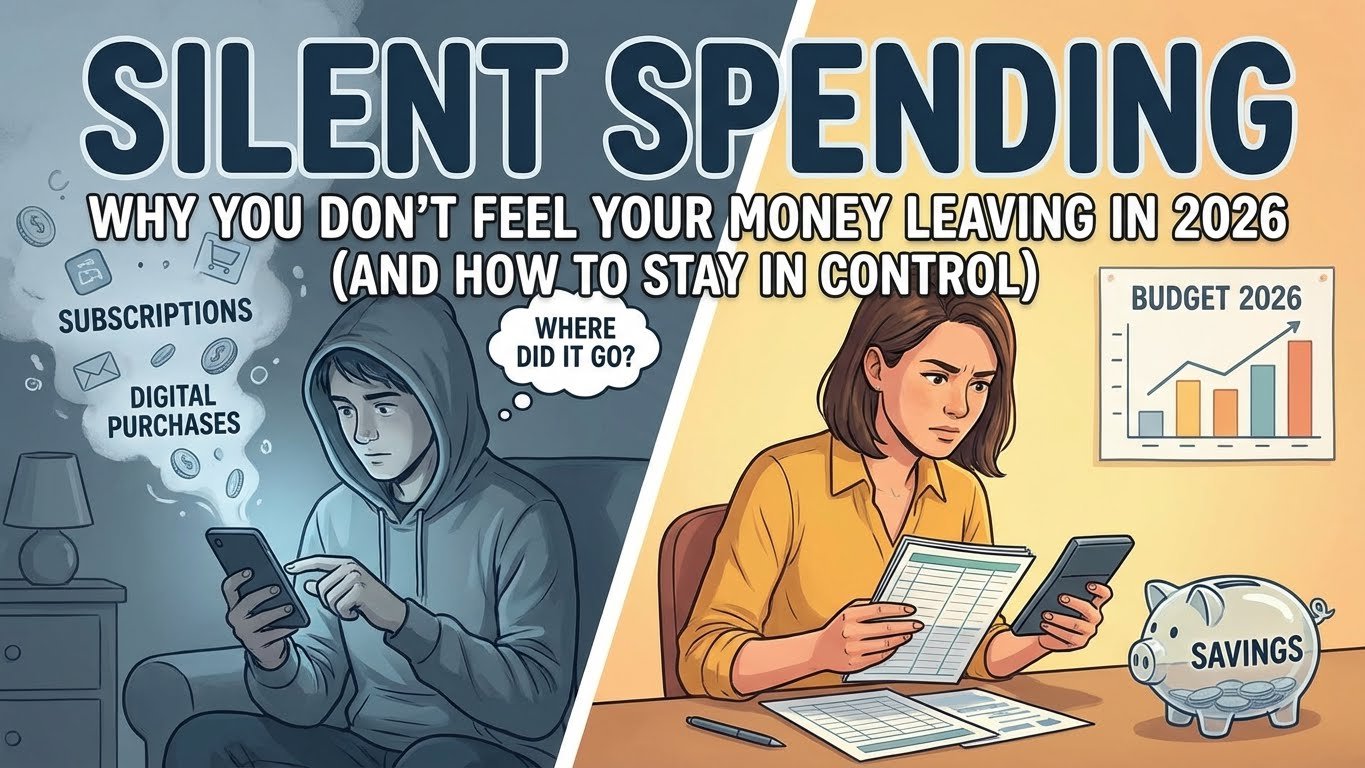
Silent Spending: Why You Don’t Feel Your Money Leaving in 2026 (And How to Stay in Control)

Something strange happens when you look at your bank app in 2026.

You don’t remember spending that much.
You don’t remember making that many payments.
Yet the numbers are correct.

This is not a mistake.

This is silent spending—a side effect of how modern money systems work today.

Payments are faster, smoother, and smarter than ever. But that speed has quietly changed how we feel about money. In this article, we’ll explore why spending feels invisible in 2026, how AI-powered wallets and smart credit created this shift, and how you can stay fully in control without going back to old, painful habits.


When Spending Used to Hurt (In a Good Way)

Let’s be honest.

Spending money used to hurt a little.

  • Handing over cash felt real
  • Swiping a card felt intentional
  • Entering a PIN made you pause

That pause mattered. It forced your brain to register the cost.

In 2026, that pause is gone.

You tap.
You glance.
You move on.

No friction. No pain. No reminder.


What Is Silent Spending?

Silent spending is not about overspending on purpose.

It happens when:

  • Payments are automated
  • Decisions are optimized in the background
  • Multiple micro-transactions occur daily

Each payment is small, painless, and quick.

But together, they quietly add up.


The Technology That Made Spending Invisible

Silent spending didn’t happen by accident. It was designed.

Key Technologies Behind It

  • AI wallets
  • Smart credit systems
  • Auto-billing subscriptions
  • One-tap payments
  • Dynamic payment routing

All of these exist to improve convenience—and they succeeded.

But convenience always has a psychological cost.


Why AI Wallets Feel Effortless

AI wallets remove effort by:

  • Choosing the payment method for you
  • Applying rewards automatically
  • Managing credit usage silently
  • Approving transactions instantly

Your brain no longer “approves” spending.

The system does.


The Brain Doesn’t Register Invisible Transactions

Your brain understands pain.

It understands:

  • Physical effort
  • Time delay
  • Manual actions

It does not understand digital abstraction well.

When spending becomes:

  • Fast
  • Automated
  • Repetitive

Your brain stops tracking it emotionally.

This is why silent spending feels harmless—until it isn’t.


Micro-Spending Is the Real Budget Killer

In 2026, people rarely overspend in one big transaction.

They overspend through:

  • Small subscriptions
  • In-app purchases
  • Daily convenience payments
  • Automatic renewals

Each one feels insignificant.

Together, they drain cash flow quietly.


AI Makes Spending Smarter—But Also Easier

AI wallets optimize for:

  • Lowest cost
  • Best rewards
  • Lowest risk

But they don’t optimize for self-awareness.

That’s your responsibility.

AI removes friction.
Humans must add intention.


Why Credit No Longer Feels Like Debt

This is dangerous—but important to understand.

Smart credit:

  • Adjusts limits dynamically
  • Breaks payments into flexible terms
  • Hides traditional billing cycles

As a result, credit feels like “available money,” not borrowed money.

That psychological shift is powerful—and risky if unmanaged.


Silent Spending vs Smart Spending

Silent spending happens when you forget.

Smart spending happens when:

  • AI optimizes
  • You review
  • You set boundaries

The difference is not technology.
It’s behavior.


How AI Can Actually Prevent Overspending

Used correctly, AI is not the enemy.

Modern wallets can:

  • Detect impulse purchases
  • Warn you before unusual spending
  • Predict end-of-month shortfalls
  • Suggest spending pauses

These tools exist—but only if enabled.


Why Many Users Ignore Alerts

People disable alerts because:

  • They feel annoying
  • They break convenience
  • They cause anxiety

But alerts are not punishments.

They are awareness tools.

Turning them off brings silence—and silence hides leaks.


Subscriptions: The Quietest Money Drain

Subscriptions are the core of silent spending.

In 2026:

  • Most payments are recurring
  • Many renew automatically
  • Few are actively reviewed

AI wallets now offer:

  • Subscription tracking
  • Duplicate detection
  • Cancellation suggestions

Ignoring these features costs real money.


The Illusion of “I Can Afford It”

Smart credit creates an illusion.

Because:

  • Limits adjust
  • Payments spread out
  • Wallets don’t decline often

Users feel financially safer than they actually are.

Affordability must be measured—not felt.


Why Monthly Budgets Are No Longer Enough

Monthly budgets assume:

  • Fixed income
  • Fixed expenses
  • Predictable cycles

Modern money is fluid.

Better tools include:

  • Weekly spending snapshots
  • Rolling forecasts
  • Category heat maps

These show patterns—not just totals.


The New Skill: Financial Awareness, Not Control

In 2026, controlling every transaction is unrealistic.

The new skill is:

  • Monitoring trends
  • Understanding AI decisions
  • Adjusting rules, not actions

You don’t drive every second—but you still steer.


How to Break the Silent Spending Cycle

Here’s what works in real life:

1. Weekly 5-Minute Review

Not monthly. Weekly.

2. Enable “Unusual Spend” Alerts

Let AI speak when patterns break.

3. Set Soft Limits, Not Hard Blocks

Warnings work better than denials.

4. Review Subscriptions Quarterly

Cancel what you forgot existed.

5. Keep One “Manual Payment” Habit

One purchase per week that you consciously approve.

This keeps money feeling real.


Why Silence Is Not Always Comfort

Silence feels peaceful.

But financial silence hides:

  • Bad habits
  • Slow leaks
  • Growing dependence

Healthy money systems speak softly—but clearly.


The Future: Spending That Talks Back

The next evolution is not more automation.

It’s conversational finance.

Wallets will say:
“You’ve spent more on convenience this week.”
“This subscription no longer fits your pattern.”
“This purchase may affect next month’s goals.”

That’s not control.

That’s guidance.


Final Thoughts: Make Silence Work for You

Silent spending is not evil.

It’s efficient.

But efficiency without awareness leads to loss.

In 2026, the smartest people don’t reject AI wallets.

They partner with them.

Let AI move the money.
You decide the meaning.


Frequently Asked Questions (FAQs)

1. What is silent spending?

It refers to unnoticed spending caused by automated and frictionless payments.

2. Are AI wallets responsible for overspending?

No. Behavior matters more than technology.

3. How can I stop silent spending?

Use alerts, reviews, and spending insights.

4. Is smart credit dangerous?

Only if limits and awareness are ignored.

5. Are subscriptions the biggest issue?

Yes, especially forgotten and duplicate ones.

6. Do I need to go back to cash?

No. You need better visibility, not older tools.

7. Is silent spending common in 2026?

Yes, due to automation and convenience.


Disclaimer

This content is for informational purposes only and does not constitute financial advice. Always consult official sources or financial professionals before making financial decisions.

Invisible Money: How AI Decides Every Payment You Make in 2026

A strange thing is happening to money.

You still earn it.
You still spend it.
You still worry about it sometimes.

But you no longer see it move.

In 2026, money has become invisible—not because it disappeared, but because artificial intelligence quietly took over the decision-making behind every payment.

You tap your phone.
The payment succeeds.
And you move on.

What you don’t see is the intelligence working behind that moment—choosing how to pay, where the money comes from, how much credit to use, how rewards are applied, and how risk is managed.

This article explains how invisible money works, why AI now decides most payments for you, and how to benefit from this shift without losing financial awareness.


When Money Stopped Asking for Permission

There was a time when every payment felt deliberate.

You checked your balance.
You chose cash or card.
You worried about limits.
You remembered due dates.

That friction was annoying—but it made money visible.

In 2026, friction is gone.

Payments are:

  • Instant
  • Automatic
  • Optimized
  • Context-aware

Money no longer asks, “Are you sure?”
It simply moves—if the system decides it should.


What Does “Invisible Money” Really Mean?

Invisible money does not mean:

  • You lost control
  • You don’t own your funds
  • Banks vanished

It means:

  • Decisions moved into the background
  • AI handles complexity
  • Finance operates quietly

Just like your phone manages battery usage without asking you, your wallet now manages money flow without constant input.


The AI Layer Behind Every Payment

Every modern wallet in 2026 runs on an AI decision layer.

This layer exists to answer one question:

“What is the best possible way to complete this transaction right now?”

To answer that, AI analyzes dozens of factors in real time.


What AI Evaluates Before You Pay

Before a payment is approved, your wallet evaluates:

  • Current bank balance
  • Upcoming bills and subscriptions
  • Credit utilization
  • Repayment history
  • Merchant category
  • Transaction size
  • Time of day
  • Location consistency
  • Reward opportunities
  • Risk indicators

This happens in milliseconds.

By the time you see a confirmation, the decision is already optimized.


Why Humans Are Bad at Payment Decisions

This part is uncomfortable—but honest.

Humans:

  • Overspend emotionally
  • Forget reward rules
  • Ignore interest math
  • Miss payment timing
  • Choose convenience over value

AI doesn’t.

AI doesn’t feel urgency.
AI doesn’t chase dopamine.
AI doesn’t forget.

That’s why it now decides how money moves.


From “How Should I Pay?” to “Just Pay”

In the past, you asked:

  • Debit or credit?
  • Cashback or points?
  • EMI or full payment?

In 2026, you don’t ask.

Your wallet already knows:

  • What costs least
  • What earns most
  • What keeps risk lowest

The result is invisible decision-making.


Smart Credit Makes Money Flexible

Traditional credit was rigid.

You had:

  • One card
  • One limit
  • One billing cycle

Invisible money uses smart credit instead.

What Smart Credit Does Differently

  • Adjusts limits dynamically
  • Allocates credit per transaction
  • Changes pricing based on risk
  • Prevents overuse automatically

Credit becomes flexible, not dangerous.


Why Fixed Credit Limits Are Fading Away

Fixed limits assume life is predictable.

But in reality:

  • Income varies
  • Expenses spike
  • Emergencies happen

Smart credit responds in real time.

It expands when you’re stable.
It tightens when risk increases.

This protects users without removing access.


Rewards Happen Without Thinking

One of the biggest changes in invisible money is rewards.

You no longer “earn and redeem.”

Instead:

  • Cashback applies automatically
  • Points convert instantly
  • Merchant discounts activate silently

Your wallet chooses the best outcome per transaction.

Most users don’t even notice—until they review monthly insights.


The Death of the Statement Surprise

Monthly statements used to shock people.

“Where did my money go?”

Invisible money reduces that shock by:

  • Providing real-time summaries
  • Forecasting end-of-month balances
  • Sending early warnings

Instead of reacting to damage, users see it coming.


Security Becomes Preventive, Not Reactive

Plastic cards relied on reaction:

  • Fraud happens
  • You notice
  • You report
  • Bank responds

AI wallets prevent fraud before completion.

How Invisible Security Works

  • Behavioral biometrics
  • Device fingerprinting
  • Location pattern analysis
  • AI fraud scoring

If something feels wrong, the payment stops silently.

No panic.
No damage.


The Psychological Risk of Invisible Money

Invisibility has a downside.

When money doesn’t feel real, people can:

  • Overspend
  • Ignore budgets
  • Lose awareness

That’s why smart wallets now include:

  • Spending nudges
  • Emotional purchase detection
  • Cooling-off alerts
  • Category limits

Your wallet may say:
“This purchase is outside your normal pattern.”

That moment matters.


Are We Becoming Too Dependent on AI?

This is a valid concern.

Invisible money should not mean blind trust.

Healthy systems allow:

  • Manual overrides
  • Transparent explanations
  • Custom limits
  • Full visibility when needed

AI should assist—not replace judgment.


Who Controls Invisible Money?

Despite appearances, you still do.

You control:

  • Limits
  • Permissions
  • Alerts
  • Linked accounts

The difference is:
You no longer control every micro-decision.

And honestly—that’s often a good thing.


Privacy in an Invisible Finance World

Invisible systems require data.

That’s the trade-off.

In 2026, strong regulations now enforce:

  • Explicit consent
  • Purpose-limited data use
  • Encryption standards
  • Right to explanation

Users gain efficiency—but must stay informed.


Banks Didn’t Lose Power—They Lost Visibility

Banks still matter deeply.

They now:

  • Provide regulated capital
  • Manage credit risk
  • Power infrastructure
  • Ensure compliance

What changed is visibility.

Users see wallets.
Banks work quietly underneath.


Who Benefits the Most from Invisible Money?

  • Busy professionals
  • Families managing expenses
  • Freelancers
  • Online shoppers
  • Travelers
  • First-time credit users

Less friction means fewer mistakes.


Who Needs to Be Extra Careful?

  • People with impulse spending habits
  • Users who ignore alerts
  • Anyone carrying high-interest debt

Invisible money amplifies habits.

Good habits thrive.
Bad habits get expensive.


How to Stay Smart in an Invisible Money World

You don’t need control over everything.

You need awareness.

  1. Review wallet summaries weekly
  2. Keep alerts enabled
  3. Set category limits
  4. Understand credit usage
  5. Read system suggestions

Invisible money works best when you stay visible to it.


The Bigger Shift: Money Becomes a Background Service

The biggest change is not technology.

It’s psychology.

Money is no longer something you constantly manage.
It becomes something that quietly supports your life.

That’s powerful—when done right.


Final Thoughts: Invisible Doesn’t Mean Unimportant

Money hasn’t disappeared.

It has simply moved backstage.

AI now handles:

  • Complexity
  • Optimization
  • Risk
  • Speed

Humans still handle:

  • Goals
  • Values
  • Discipline

Invisible money is not about giving up control.

It’s about letting intelligence handle the noise—so you can focus on living.


Frequently Asked Questions (FAQs)

1. What is invisible money?

It refers to AI-driven payment systems that automate financial decisions in the background.

2. Is AI really deciding payments in 2026?

Yes. Most modern wallets use AI to optimize payment methods and credit usage.

3. Is invisible money safe?

Yes, when provided by regulated institutions with strong security measures.

4. Can invisible money overspend for me?

No, if limits and alerts are properly configured.

5. Do I still need to monitor spending?

Yes. Awareness is still essential.

6. Are rewards better with invisible money?

Usually yes, because rewards are optimized automatically.

7. Can beginners use AI wallets safely?

Yes. They often reduce beginner mistakes.


Disclaimer

This article is for educational purposes only and does not constitute financial advice. Always read official terms and consult financial professionals when needed.